
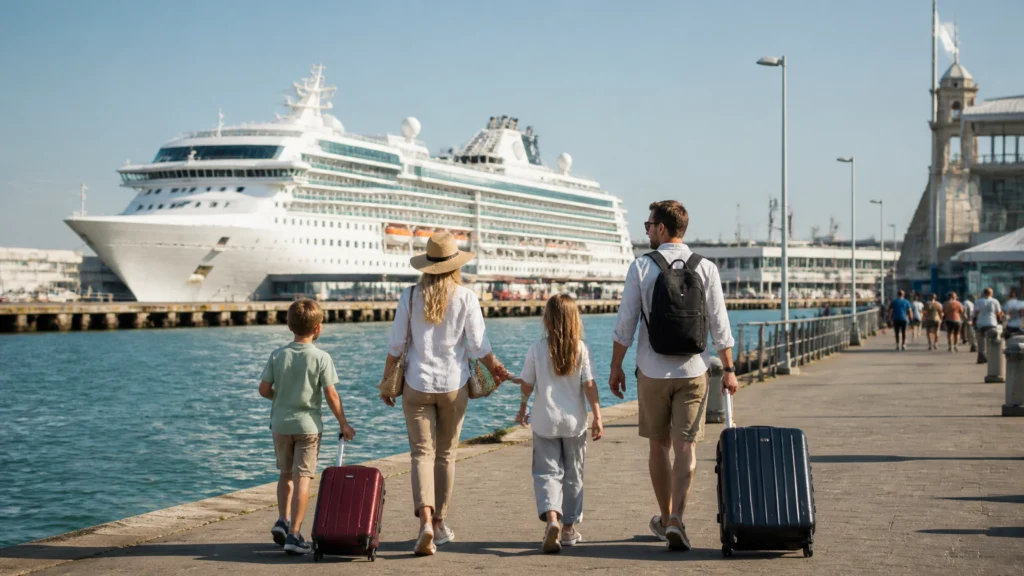
A first cruise can feel exciting, but it can also raise a lot of questions.
Which ship is right for you? Is an inside cabin too small? How many nights should you book? What is actually included in the price?
You do not need to understand every cruise term before you start. I can help you work through the choices and narrow them down to the options that genuinely suit you.
Here are ten things worth knowing before you book your first cruise.
1. Choose the ship before you choose the itinerary
The destination matters, but the ship will be your holiday base for several days or weeks. It is worth thinking about the onboard experience as carefully as the ports you will visit.
Large resort-style ships may include:
- Swimming pools and waterslides
- Kids’ clubs and teen areas
- Several restaurants and casual dining options
- Theatre shows and live entertainment
- Sports facilities and family activities
Smaller ships often feel quieter and more personal. They may suit couples, older travellers or anyone who prefers a calmer atmosphere.
There is no universally “best” cruise ship. The right choice depends on how you like to spend your time. If you are travelling with children, I’ll look at age-appropriate clubs, family cabins, dining flexibility and the general feel of the ship.
You can read more about how I help on the Simply Journeys cruises page.
2. No-fly cruises from Southampton can make family travel easier
No-fly cruises from Southampton are becoming an increasingly popular choice for UK families in 2026.
Instead of flying to meet your ship, you travel to the port by car or train, board in Southampton and return there at the end of the holiday. Current 2026 programmes include family-friendly sailings from Southampton with cruise lines such as P&O Cruises, Royal Caribbean and MSC Cruises, subject to availability and itinerary changes.
This can remove several common travel stresses:
- No airport security or flight connections
- No airline baggage weight limits
- Easier packing for pushchairs, car seats and children’s essentials
- Less risk of flight disruption before the cruise
- A simpler journey from home to the ship
Southampton sailings can include short breaks, Norwegian fjords, Northern Europe, Spain, Portugal, the Canary Islands and longer voyages.
For families, a no-fly cruise can be particularly appealing because the holiday starts when you arrive at the port. However, it is still important to check journey times, parking or rail arrangements and the port’s recommended arrival time.
3. Pick an itinerary length that feels manageable
A short cruise of three to five nights can be a useful introduction if you are unsure whether cruising will suit you.
For many first-time cruisers, seven nights offers a comfortable balance. You have time to settle into the ship, enjoy a few sea days and visit several destinations without being away for too long.
Longer cruises can be excellent if you want a slower pace or more distant destinations. However, a 10-, 14- or 21-night cruise may feel like a big commitment for a first experience, particularly with younger children.
When comparing itineraries, look at:
- The number of sea days
- How early the ship arrives in each port
- How much time you have ashore
- The number of consecutive port days
- The distance from your home to Southampton
- Whether the itinerary includes destinations you genuinely want to visit
A cruise is not simply a list of ports. Sea days are part of the experience, so consider whether you would enjoy relaxing onboard or whether your family prefers a busy sightseeing schedule.
4. Understand the main cabin types
Cruise cabins are usually divided into four main categories.
Inside cabin
An inside cabin has no window and is often the most affordable option. It can work well if you mainly use your cabin for sleeping and getting ready.
Oceanview or outside cabin
This includes a window or porthole, giving you natural light without the cost of a balcony.
Balcony cabin
A balcony gives you private outdoor space and can be especially enjoyable on scenic routes such as the Norwegian fjords. It also gives parents somewhere quiet to sit while children are resting.
Suite
Suites usually provide more space and may include additional benefits, such as priority services, larger balconies or separate living areas.
For families, the layout may be more important than the category name. I’ll check how many people the cabin can accommodate, whether beds are fixed or converted, and whether there are family or connecting cabin options.

5. Cabin location matters more than many first-timers expect
Once you have chosen the cabin type, think about its position on the ship.
If anyone in your party is concerned about motion, a cabin towards the middle of the ship and on a lower or middle deck may feel more comfortable. This does not guarantee that you will not feel movement, but it can be a sensible consideration.
You may also want to avoid cabins:
- Directly below a pool deck
- Above a theatre, bar or nightclub
- Beside lifts or busy stairways
- Near the engine area
- At the very front or back of the ship, if you are sensitive to movement
A cheaper guarantee cabin may give the cruise line freedom to allocate your exact location later. That can be fine if price is your main priority. If quiet surroundings, accessibility or a mid-ship position matter to you, choosing a specific cabin may be worthwhile.
6. Check what is included in the fare
A cruise fare will usually include your accommodation, main meals, standard entertainment and access to many onboard facilities.
However, the details vary between cruise lines and fare types.
Often included:
- Your chosen cabin
- Breakfast, lunch and dinner in the main restaurants
- Buffet and casual dining
- Standard shows and activities
- Use of pools and many public areas
- Basic tea, coffee and water in certain settings
Often charged separately:
- Alcohol and many soft drinks
- Speciality coffee
- Speciality restaurants
- Wi-Fi
- Shore excursions
- Spa treatments
- Some fitness classes
- Selected activities
- Gratuities or service charges, depending on the cruise line and fare
Do not assume that “all-inclusive” means exactly the same thing everywhere. One fare may include selected drinks, while another may also include Wi-Fi, speciality dining and excursions.
Before you book, I’ll compare the inclusions properly so you can look at the likely overall cost rather than just the starting price.
7. Think about dining before you decide
Cruise dining can be flexible, formal or somewhere in between.
Some ships offer set dining times and a regular table. Others provide flexible dining, where you choose when to eat. Many also have buffets and casual family venues.
If you are travelling with young children, consider:
- Whether dining times work with bedtime
- Whether children’s menus are available
- How easy it is to eat quickly before an evening show
- Whether you need to pre-book speciality restaurants
- Whether allergies or dietary requirements can be accommodated
You do not need to choose the most expensive dining option. The important thing is finding a ship and fare that fit the way you actually like to eat.
8. Plan around your children’s ages and interests
A family cruise is not automatically the right choice for every family. The ship’s facilities and policies need to match your children.
For younger children, check:
- Nursery availability and age restrictions
- Whether children must be toilet-trained for certain pools
- Kids’ club opening hours
- Evening childcare arrangements
- Cabin layouts and cot availability
For older children and teenagers, look for:
- Dedicated teen areas
- Sports facilities
- Waterslides or adventure activities
- Age-appropriate entertainment
- Safe opportunities for some independence
This is where family cruise packages can be useful. Rather than comparing hundreds of ships yourself, I can focus on the practical details that will affect your family’s day-to-day experience.

9. Budget for the extras before you book
The headline price is only one part of the budget.
You may also need to allow for:
- Travel to Southampton and parking
- Drinks or Wi-Fi packages
- Excursions
- Speciality dining
- Gratuities
- Travel insurance
- Pre-cruise accommodation, if needed
- Spending money in port
You do not have to book every extra. Many families are perfectly happy with the included dining and entertainment. The important thing is knowing your choices before you commit.
I’ll help you compare the fare conditions and explain which extras are optional, which may be useful and which are unlikely to add value for your particular trip.
10. Get help if the choice feels too wide
Cruising can be a brilliant way to travel, but the number of ships, cabins, fares and itineraries can quickly become confusing.
That is where personal cruise planning services can make the process easier.
With Simply Journeys, you deal directly with me from the first conversation through to the booking and beyond. I’ll ask about your dates, budget, travelling companions and priorities. If you are not sure what you want yet, that is fine too.
You might simply know:
- You would like to depart from Southampton
- You want a family-friendly ship
- You would prefer a balcony or oceanview cabin
- You have a rough budget
- You are considering summer 2026 or a school holiday
That is enough to start. I’ll research suitable options, compare the details and ask questions where I need more information rather than guessing.
Ready to explore your first cruise?
You do not need to know which cruise line or ship you want before getting in touch.
Tell me what you have in mind, even if it is only an approximate budget, a possible month or the ages of the people travelling. I’ll help you understand the options and find a cruise that feels comfortable for your first experience.
You can start a holiday enquiry with Simply Journeys or email me directly at david@simplyjourneys.co.uk.
I’ll help you make sense of the choices, so arranging your cruise feels simpler from the beginning.