
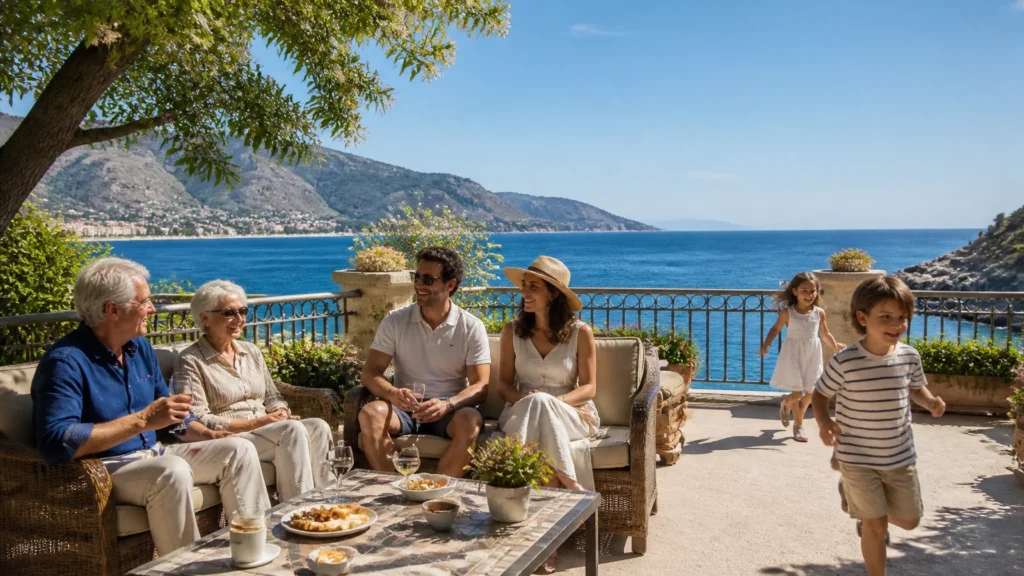
A holiday with grandparents, parents and children can become one of your family’s most special trips.
It might be a milestone birthday, a big anniversary, a long-awaited family reunion or simply a chance for three generations to spend proper time together. Grandparents may even be treating the family, making the occasion feel even more meaningful.
But multigenerational holidays do need thoughtful planning.
Different ages often mean different energy levels, sleeping arrangements, budgets and ideas of fun. The aim is not to make everyone do the same thing every day. It is to choose a holiday where everyone can enjoy being together, while still having enough space and flexibility to relax in their own way.
Here is what I would think about before booking.
START WITH THE PEOPLE
Talk about what everyone needs
The best place to begin is with the group, not the destination.
Before looking at hotels or villas, make a simple list of:
- Who is travelling and their ages
- Preferred dates and how flexible they are
- Departure airports
- Budget expectations
- Mobility or medical considerations
- Room and sleeping preferences
- Activities people would enjoy
- Things anyone would prefer to avoid
You do not need to have every answer straight away. Even a rough idea such as “three generations, a week in the sunshine, easy flights and a comfortable resort” is enough to start narrowing things down.
For a multigenerational trip, I would also ask about the pace everyone prefers. Does one person want long sightseeing days while another needs regular rest? Would the children be happy with a kids’ club or pool? Does anyone need step-free access or a room close to a lift?
These details can completely change which options are suitable.
CHOOSE ACCOMMODATION THAT GIVES EVERYONE ROOM

Privacy and togetherness matter equally
Accommodation is one of the most important decisions on a family holiday.
A property may sleep ten people, but that does not always mean it will feel comfortable for ten people. Look carefully at the layout rather than just the number of beds.
Useful features can include:
- Several bathrooms, ideally with some ensuites
- A ground-floor bedroom and bathroom for anyone with limited mobility
- Interconnecting rooms or family suites
- Separate living areas
- A large dining table where everyone can eat together
- An enclosed garden or terrace
- Easy access to the pool, beach or restaurants
- A kitchen or kitchenette if flexible mealtimes are important
A villa or large holiday home can work well when the family wants shared space and more independence. You might have breakfast together, spend time by the pool and then allow each household to retreat to its own bedroom or lounge.
A family-friendly resort may be easier if you want organised activities, restaurants, housekeeping and facilities for different ages. In that case, I would look beyond the headline facilities and check the practical details. How far is the room from the main pool? Are there quieter areas? Does the family suite genuinely have separate sleeping space?
A cruise can also suit some multigenerational families. There is no need to pack and unpack between destinations, and each household can choose a cabin type that suits its budget. There are usually activities for children, entertainment for adults and plenty of ways to spend time together without needing to organise every day from scratch.
You can explore more about the different options on my family holidays page or read about cruise planning with Simply Journeys.
PLAN THE JOURNEY AROUND THE YOUNGEST AND OLDEST TRAVELLERS

Comfortable travel makes a difference from the start
A flight time that looks convenient on paper may not work equally well for a toddler, a teenager and an older traveller.
For many families, daytime flights are easier. They can reduce tiredness, make medication schedules simpler and avoid arriving at a destination in the early hours. Direct flights are often preferable too, particularly when avoiding a tight connection or a long walk through a large airport matters.
I would consider:
- The flight departure and arrival times
- Whether a direct route is available
- The distance to the airport from home
- The length of the transfer at the destination
- Whether airport assistance may be useful
- How much walking is involved
- Whether there are very early departures or late-night arrivals
A slightly longer flight with a sensible time and short transfer may be a better choice than the cheapest option with a difficult connection.
If anyone needs mobility assistance, tell me early in the planning process. It is helpful to understand whether they need step-free access, support through the airport, help boarding or simply less walking between transport points. I will ask questions rather than make assumptions.
BUILD IN DIFFERENT HOLIDAY RHYTHMS
Everyone does not need to do everything
One of the easiest ways to create tension on a large family holiday is to plan every day around one shared itinerary.
Instead, think about having one main shared moment each day. That might be breakfast, dinner, a boat trip, a visit to a market or an afternoon by the pool.
The rest of the day can be more flexible.
For example:
- Grandparents might enjoy a slower morning and a quiet lunch
- Parents might take younger children to the pool or kids’ club
- Teenagers might want time with people their own age
- One group might go sightseeing while another stays at the resort
- Everyone might meet for dinner or an evening walk
A good multigenerational holiday allows people to spend time together without making togetherness feel compulsory.
I would also avoid booking a full schedule of excursions. One main activity on a day is often enough, particularly in hot weather. Leave room for naps, slow breakfasts and days when nobody wants to do much at all.

AGREE HOW THE COSTS WILL WORK
Clear conversations are kinder than awkward surprises
Money can become uncomfortable when several households are travelling together, especially if one family member is paying for all or part of the holiday.
Try to agree the basics before booking:
- Who is paying for flights
- How accommodation will be divided
- Whether room types affect the split
- Who is covering meals and drinks
- Which excursions are optional
- How children’s costs will be handled
- Whether there will be a shared food or activity fund
There is no single correct approach. Some families divide the accommodation equally by household. Others split it by room or ask the person treating everyone to cover the main booking while each household pays for personal spending.
The important thing is that everyone understands the arrangement before deposits are paid.
I can help compare options at different price points, so the group can see where the budget is going. Sometimes changing the dates, departure airport or accommodation style creates a better balance without compromising the whole trip.
DO NOT LEAVE TRAVEL INSURANCE UNTIL THE END
Older travellers may need more careful cover
Travel insurance is important for everyone, but older travellers and anyone with a pre-existing medical condition may need particular attention.
The UK Government’s travel insurance guidance recommends arranging suitable cover as soon as possible after booking. It also advises travellers to declare existing physical or mental health conditions, including conditions under investigation.
Before choosing a policy, check:
- Age limits and any increased excess
- Medical expenses and emergency repatriation
- Cover for declared pre-existing conditions
- Cancellation cover
- Cover for mobility aids or medical equipment
- The full length of the trip
- Any activities planned
- Cruise-specific requirements, if relevant
A standard family policy may not automatically provide the right cover for grandparents. You may need one policy for the whole group or separate policies that reflect each person’s circumstances.
I can help you identify the questions to ask, but the policy wording and insurer’s terms should always be checked carefully. Do not send sensitive medical details through a general enquiry form. If you need to discuss accessibility or assistance, simply let me know and I will explain the appropriate next step.
LET ME HANDLE THE COMPLICATED PART
Personal planning can make a large family trip feel manageable
Multigenerational holidays involve more moving parts than a typical booking. That is where personal advice can make a real difference.
When you work with me, I will look at the full picture rather than searching for a hotel in isolation. I can compare accommodation layouts, flight times, transfer distances, room arrangements and the practical details that are easy to miss when you are working through dozens of websites.
You deal directly with me from the first conversation through to booking and aftercare. I will narrow the choice down to options that fit your family instead of sending you hundreds of possibilities.
You do not need a finished itinerary before getting in touch. Tell me the approximate group size, the ages involved, your preferred dates, your budget and anything that matters most. If something is unclear, I will ask.
Simply Journeys has access to more than 250 suppliers, so I can research different types of holidays while keeping the planning personal and straightforward. Depending on your plans, that might include a family-friendly resort, a villa, a cruise, a UK break or a longer trip built around a special celebration.
Relevant financial protection will be explained before you book. Flight-inclusive packages may be protected by ATOL, while Simply Journeys is a member of Protected Trust Services. The protection that applies depends on the travel arrangements you choose, so the booking information and documentation should always be checked carefully.
START WITH WHAT YOU KNOW
A successful multigenerational holiday does not have to be perfect for every person every minute.
It needs to be comfortable, realistic and flexible enough for different generations to enjoy the experience in their own way.
If you are considering a family trip with grandparents, parents and children, tell me what you have in mind. You can start with an approximate idea. I’ll review the details, ask any useful questions and help you work through the options one step at a time.
There is no need to have everything decided before we begin.